

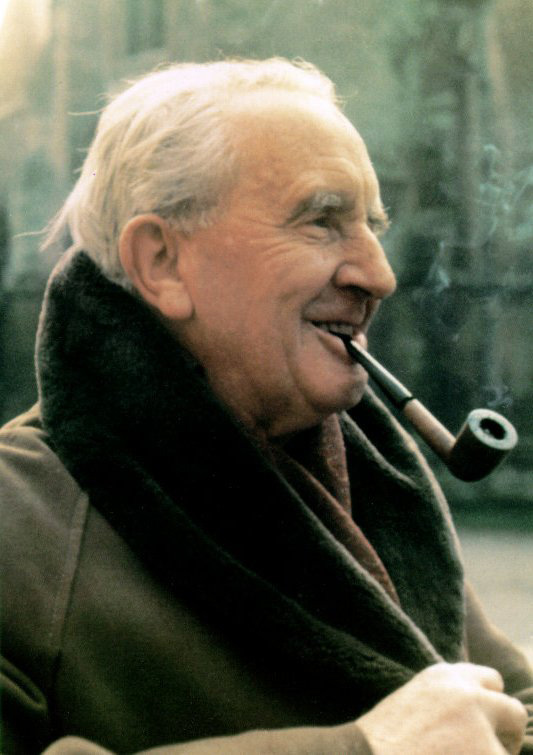
John Ronald Reuel Tolkien (1892-1973), the beloved author of “The Hobbit” and “The Lord of the Rings,” is widely celebrated for his rich storytelling and intricate world-building, which have captivated readers across generations and inspired countless adaptations in film, art, and literature. Tolkien was also known for his devout Catholic faith, which played a significant role in his worldview and moral framework, influencing the themes of sacrifice, redemption, and the enduring struggle between good and evil present in his works. His love for pipe smoking became a hallmark of his persona, often portrayed in depictions of the beloved character Bilbo Baggins, and served as a symbol of comfort and reflection during the long hours of writing. These elements not only shaped his personal life but also permeated his literary works, adding depth and authenticity to his characters and settings, creating an immersive experience that invites readers to explore the rich landscapes of Middle-earth and connect with its unforgettable inhabitants. Through his meticulous attention to language, culture, and mythology, Tolkien crafted a legacy that continues to resonate with fans and scholars alike, establishing him as one of the foremost figures in fantasy literature.
Tolkien’s Faith
Tolkien was raised Catholic by his mother, Mabel, after his father died when he was only three years old. Mabel’s conversion to Catholicism greatly influenced Tolkien, giving him a strong spiritual base that shaped his life and beliefs. Tragedy hit again, with his mother passing when he was 12. After that, Tolkien and his brother were raised by their Catholic priest, Father Francis Xavier Morgan. The teachings of Catholic saints, especially St. John Henry Newman, a 19th century English theologian and poet canonized by the Catholic Church in 2019, were important in his spiritual growth, helping him understand faith and morality.
Tolkien’s deep appreciation for myth and storytelling was colored by his belief in a divine creator, making his narratives not just tales, but reflections of his understanding of the world’s spiritual and moral complexities. Tolkien’s faith is subtly woven into the fabric of his stories. Unlike his friend and colleague, C.S. Lewis (best known for his seven books that make up “The Chronicles of Narnia”), his stories are not and were not intended to be a religious allegory. Scholars and readers alike, however, have noted the Christian symbolism that is nevertheless present throughout his works. The themes of redemption, sacrifice, and the eternal struggle between good and evil are ever-present, all reflecting Tolkien’s deep-seated Christian beliefs.
The Art of Pipe Smoking: A Symbol of Peace
Tolkien’s love for pipe smoking began in his childhood, inspired by his guardian, Father Francis Morgan. Morgan was a pipe smoker himself and reflecting back on his own love for pipe smoking, Tolkien credited Morgan as being the genesis of his own passion with leaf and briar. Pipe smoking became both a favorite pastime and a source of relaxation and contemplation amid the demands of his academic life and writing career. For Tolkien, the act of smoking a pipe was not just about the smoke; it was a contemplative experience that brought him a profound sense of peace and reflection.
In his recollections, Tolkien often described his pipe smoking ritual as a time to collect his thoughts, allowing him to unwind and tap into his creativity. Whether he was mapping out any of the 10 languages he developed for Middle Earth, or crafting elaborate mythologies, or developing the characters that would populate his epic stories, the time spent with his pipe was sacred and invaluable. The rhythmic act of packing the pipe, lighting it, and watching the smoke trail upwards often provided him clarity and inspiration.

This personal enjoyment is beautifully mirrored in his stories, where characters like Bilbo Baggins and Gandalf are frequently seen enjoying a pipe. These moments are more than mere character traits; they serve as a window into Tolkien’s worldview. The act of smoking a pipe in Tolkien’s world symbolizes a sense of home, comfort, and contemplation. It enhances the atmosphere of familiarity and warmth, particularly in the Shire, which is emblematic of hospitality and tranquility.
In these narratives, the pipe becomes a conduit through which characters share stories, connect with one another, and reflect on their journeys. It is in these shared moments of peace that the essence of camaraderie and the joys of simple pleasures are celebrated. Through the upward curling smoke, Tolkien weaved themes of friendship, adventure, and the unhurried rhythm of life that resonate deeply with readers, inviting them to pause and reflect along with his characters.
The Forging of Faith and Pipe Smoking
For Tolkien, pipe smoking was more than a simple ritual; it was a form of meditation and a way to connect with his thoughts and spirituality. In his works, this is seen in the quiet moments of reflection and the deep conversations between characters, often accompanied by the soft glow of a pipe. The ritual of preparing a pipe, the process of filling it, and lighting it became essential parts of his creative routine, providing him with a sacred pause in which to reflect on the narratives unfolding in his mind.
The connection between Tolkien’s faith and his pipe smoking can be understood as a harmonious blend of contemplation and spirituality. Just as his faith guided his moral compass and inspired his writings, his pipe smoking provided him with the peace and tranquility needed to explore his creative depths. Each puff became a meditative breath, allowing him to transcend the everyday world and enter a realm where ideas flowed freely.
In many ways, the calming nature of pipe smoking mirrored the serene aspects of his beliefs. The gentle act of smoking encouraged moments of stillness, enabling him to immerse himself in the themes of beauty, sacrifice, and redemption that permeate his stories. This ritual not only grounded him but also served as a bridge connecting the ordinary to the extraordinary, embodying the spirituality that permeated his life and work.
Tolkien’s characters often mirror these contemplative qualities. For example, in “The Lord of the Rings,” you’ll find moments where pipe smoking serves as a catalyst for deep discussions on life, friendship, and the challenges ahead. These scenes highlight the significance of such simple pleasures—essentially demonstrating how everyday rituals can foster profound connections among individuals. In essence, Tolkien’s pipe smoking can be seen as a reflection of his deeper beliefs, interweaving creativity, spirituality, and connection in a manner that resonates with readers even today.
Conclusion
J.R.R. Tolkien’s legacy is one of profound faith and rich storytelling, interwoven with the simple pleasure of pipe smoking. By understanding these aspects of his life, we gain a deeper appreciation for the man behind the myth and the stories that continue to captivate readers around the world.
Whether you’re a longtime fan or new to Tolkien’s works, exploring the connections between his faith, his love for pipe smoking, and his writing offers fresh insights and a deeper respect for this literary genius.
 Not Just Blowing Smoke with Pastor Padron
Leave a comment